
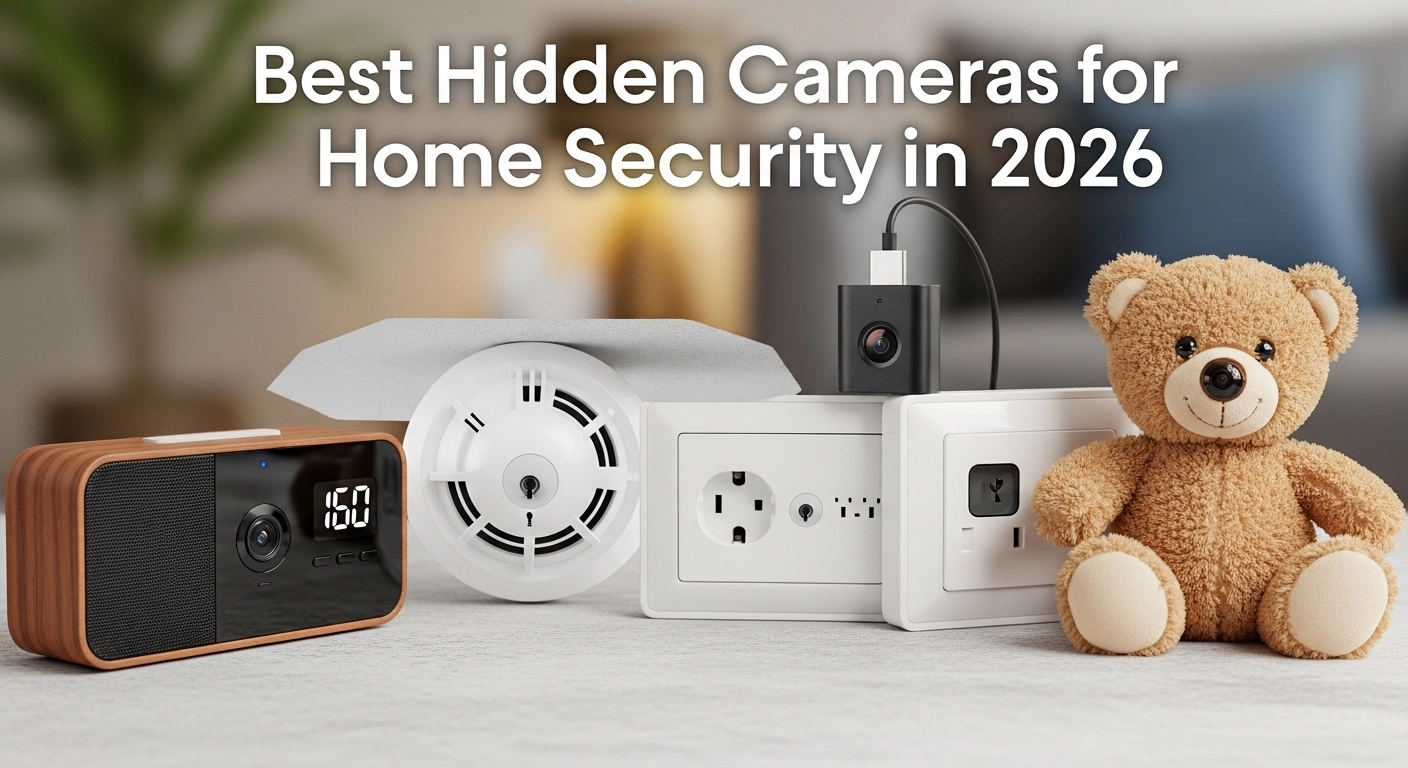
Why Some Homeowners Choose Hidden Cameras
Most home security cameras are designed to be seen — visible cameras work as a deterrent and let visitors know they’re being recorded. Hidden cameras serve a different role. They’re useful when you want to check on a babysitter, monitor a vacation rental for damage, document repeat package theft, or watch over a vulnerable family member. The best hidden cameras for home use blend into ordinary objects so naturally that even careful observers walk right past them.
Before we get into picks, an important note: hidden camera laws vary by state and country. In most US states, recording video without audio in common areas of your own home is legal, but adding audio crosses into wiretap territory in many places. Recording in private spaces like bathrooms or guest bedrooms is illegal almost everywhere, and recording employees without disclosure is a legal minefield. We’ll cover the laws in detail in another article — just know that ‘hidden’ doesn’t mean ‘unrestricted.’
Our Top 6 Hidden Camera Picks
These are the discreet cameras that actually deliver on the promise of being unnoticed while still providing useful video. Each one earns its spot through a balance of disguise, video quality, and reliability.
- Best Overall — Vitalux USB Charger Hidden Camera: Looks identical to a real wall charger and even works as one. Sharp 1080p video and motion-activated recording.
- Best Smoke Detector — Alpha Tech Smoke Detector Camera: Mounts on the ceiling and looks like a regular smoke detector. Great for living rooms and entryways.
- Best Clock — Wansview Wireless Spy Clock Camera: Functioning alarm clock with a small camera built into the LED display. Wi-Fi for remote viewing.
- Best Budget — Mini Spy Camera by Hippcron: Tiny cube under $40 that you can place anywhere. Battery life is the trade-off.
- Best Outdoor Concealment — Birdhouse Hidden Camera (DIY shells): Discreet outdoor coverage without the obvious ‘security camera’ look.
- Best for Renters — Photo Frame Hidden Camera: Sits on a shelf, hidden in a working picture frame. No mounting required, perfect for rentals.
What Makes a Good Hidden Camera
A hidden camera has two jobs: stay hidden and capture useful video. The first job often gets prioritized at the cost of the second. Many cheap hidden cameras have terrible image quality, slow motion detection, and short battery life because the manufacturer focused on the disguise. The best models do both well.
Look for at least 1080p resolution, motion-activated recording (which extends battery life), and either Wi-Fi for live viewing or a microSD card slot for local storage. Battery life varies wildly — some cameras last only a few hours of continuous recording, while motion-activated models can stretch to days or weeks. If you need 24/7 monitoring, plug-in models are far more reliable than battery-only.
Wired vs Wireless Hidden Cameras
Wired hidden cameras (typically plugged into an outlet) are the most reliable because they never run out of power. The disguise often incorporates the power source — like a USB charger camera or a smoke detector that ties into the home’s wiring. The cable can be a giveaway, so placement matters.
Wireless and battery hidden cameras give you complete placement freedom but require more thought. They need recharging or battery swaps, and most have shorter recording times. Some models combine both — a battery for portable use plus a USB cable for permanent placement. These hybrids are the most flexible if you’re not sure where you’ll end up using the camera most.
Storage and Remote Access
Hidden cameras typically store video in one of three ways: microSD card, cloud, or local DVR. MicroSD is the simplest — pop the card out, view on your computer. Cloud storage requires a Wi-Fi connection and usually a monthly subscription, but lets you view footage from anywhere. Local DVR is rare in residential models but useful for high-end installations.
If you choose Wi-Fi-connected hidden cameras, take security seriously. Use unique strong passwords and enable two-factor authentication. Hidden cameras are sometimes left on default settings because users forget the camera exists, which makes them juicy targets for credential-stuffing attacks.
Common Mistakes with Hidden Cameras
Mistake one is placing the camera somewhere with bad lighting. Hidden cameras typically have smaller sensors than dedicated security cameras, and they suffer more in low light. Aim for spots with consistent ambient lighting rather than dark corners that look ideal for hiding but produce useless footage.
Mistake two is forgetting to test the recording. Set up the camera, walk through the room a few times, and review the footage to confirm it captures what you need. Many hidden cameras have surprisingly narrow fields of view (60 to 90 degrees) compared to standard security cameras (120 to 160 degrees). You may need multiple cameras to cover a room that one regular camera could handle alone.
Mistake three is ignoring the legal side. Even in your own home, recording certain areas or people without consent can land you in serious legal trouble. We’ll cover this in our hidden camera laws guide, but the short version: stick to common areas, avoid audio recording, and disclose to live-in workers before you record.
Final Recommendation
For most home use cases, the Vitalux USB Charger Hidden Camera is our top pick — it’s plug-in (so it never runs out of power), has solid 1080p video, and the disguise is genuinely convincing. For ceiling-mounted coverage, the Alpha Tech Smoke Detector model is excellent. For temporary or rental situations, a photo frame camera gives you flexibility without permanent installation.
Whichever you pick, treat hidden cameras as a tool with serious responsibilities. Use them for legitimate security needs, respect the law and the privacy of others, and you’ll get the protection you wanted without crossing any lines.