Why You Might Need to Check
Hidden cameras in rental properties and hotels are an unfortunate reality in 2026. Most stays are completely fine, but enough horror stories show up in the news every year that knowing how to detect hidden cameras is a useful skill — especially if you travel often or stay in unfamiliar short-term rentals. The good news is that most hidden cameras can be found with simple techniques and a smartphone.
This isn’t paranoia. Major rental platforms like Airbnb and Vrbo have policies prohibiting hidden cameras in rented spaces, but enforcement relies on guests reporting violations. A 15-minute sweep when you arrive at any new accommodation is a sensible habit. Most of the time you find nothing and feel reassured. The few times you do find something, you’ll be very glad you checked.
Method 1 — Visual Inspection
The first and most effective method is just looking carefully. Hidden cameras need a clear line of sight to whatever they’re recording, and they often hide in objects pointed at beds, couches, or showers. Walk through each room and ask: ‘What’s pointed at me from here?’ Look for objects that seem out of place, oddly angled, or have suspiciously small holes.
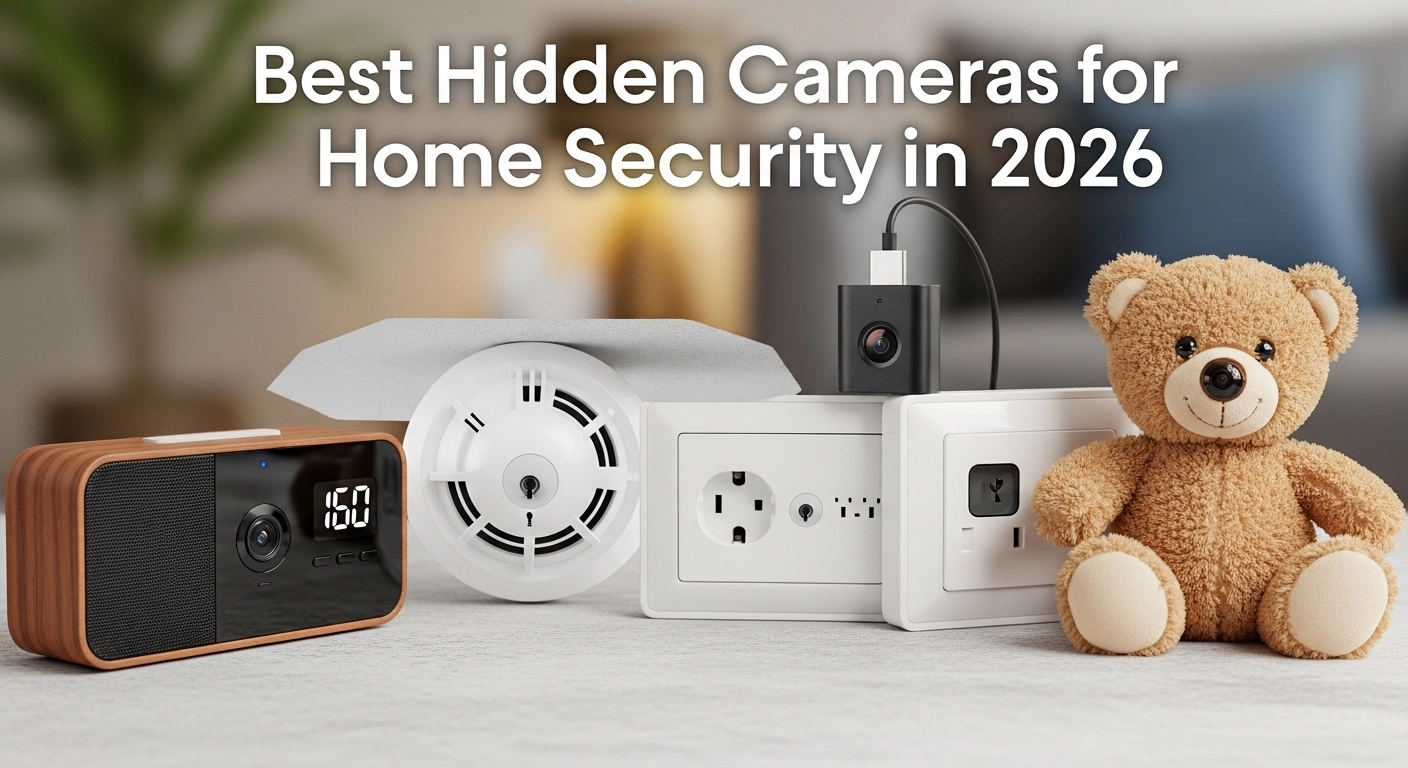
Common hiding spots include smoke detectors, alarm clocks, USB chargers, picture frames, decorative plants, and air purifiers. Pay attention to objects that seem newer or higher-quality than the rest of the room — a basic Airbnb with a fancy USB charger near the bed is worth a second look. Also check vents, light fixtures, and the seams between wall items.
Method 2 — Use Your Phone’s Flashlight
Camera lenses reflect light back distinctively. Turn off the room’s lights, turn on your phone’s flashlight, and slowly scan every surface. Hold the flashlight near your eye and watch for small bright reflections — most camera lenses produce a noticeable blue, green, or red glint.
This works best in a darkened room with the flashlight at eye level. Move slowly and methodically across each wall, ceiling, and large object. Don’t rush — small reflections are easy to miss if you’re sweeping fast. Common camera lens sizes are 1 to 5 millimeters across, so the reflection itself is small but very distinctive once you see one.
Method 3 — Check the Wi-Fi Network
If the rental has Wi-Fi access, you can scan the network for connected devices. Apps like Fing (free on iOS and Android), Network Analyzer, or WiFi Inspector show every device on the network. Look for unfamiliar devices with names suggesting cameras — anything labeled ‘Camera,’ ‘IPCam,’ ‘CCTV,’ or with a manufacturer name you don’t recognize.
This method has limits. It only catches Wi-Fi-connected cameras (not local-storage models), and many cameras now use generic device names that look ordinary. Still, it’s worth a five-minute scan, especially because finding something here gives you very strong evidence to share with the platform.
Method 4 — Use Your Phone Camera in the Dark
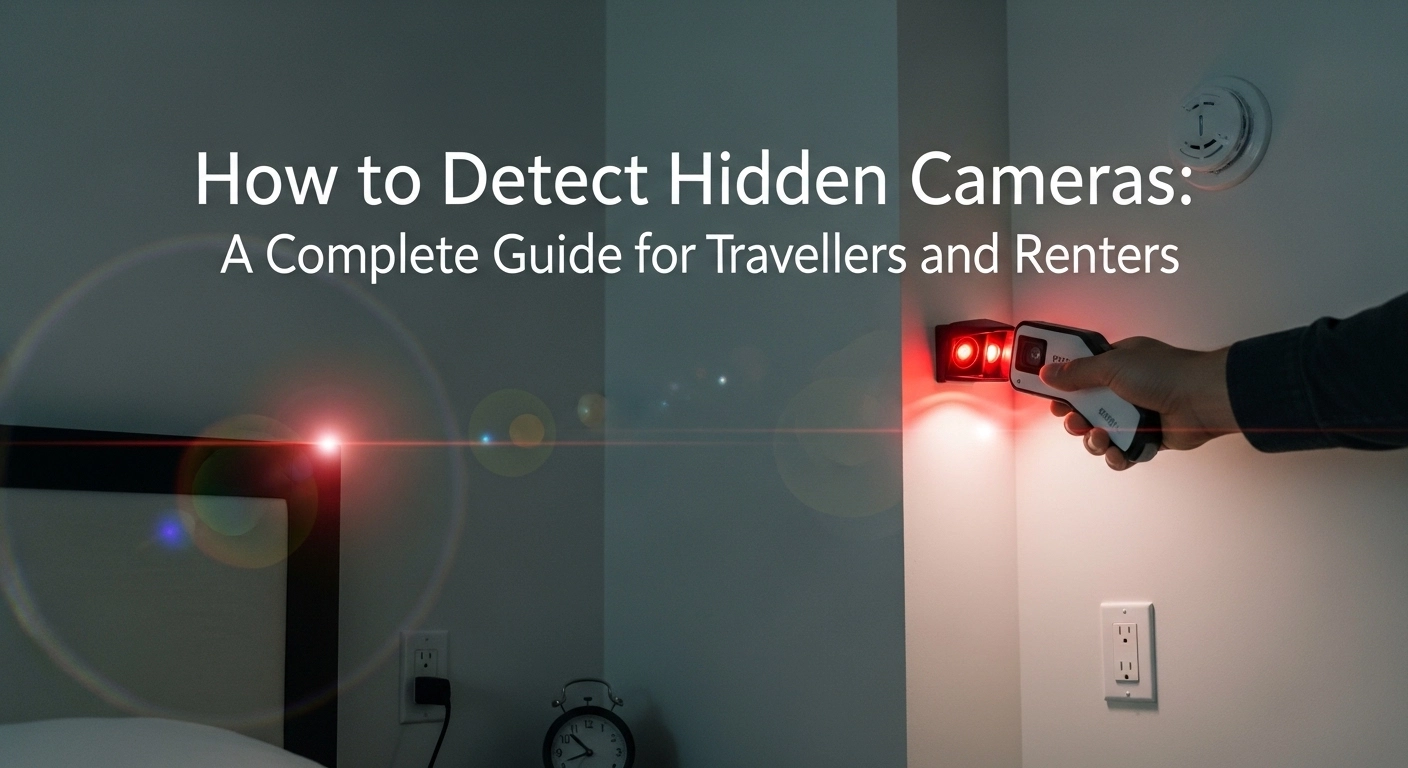
Most hidden cameras with night vision use infrared (IR) LEDs to see in the dark. These LEDs are invisible to the human eye but show up clearly through smartphone cameras. To check, turn off all lights in the room, open your phone’s camera app, and slowly scan around. Active IR LEDs appear as small purple or pink dots in the camera viewfinder.
This method works best with the front-facing camera on iPhones (rear cameras have IR filters that may block the light) and any camera on most Android phones. Move slowly and check every direction. If you see a glowing dot that disappears when you turn the room’s lights back on, you’ve likely found a hidden camera.
Method 5 — RF and Camera Detector Tools
If you travel often or want a more thorough sweep, dedicated detection tools cost $30 to $200 and combine multiple detection methods. RF detectors find wireless signals (useful for cameras that transmit live video), and lens detectors emit a specific light frequency that reflects off camera optics.
- Spy Hidden Camera Detector by JMDHKK: Around $40, does both RF and lens detection. Reasonable starter tool.
- HCS-22 Pro Detector: Around $200, professional-grade and used by privacy consultants. Overkill for occasional travelers.
- Bug Detector by SpyGuy: Mid-range option around $80, good detection accuracy and easy to use.
Honestly, for most travelers, your phone plus a careful visual inspection finds 80 to 90 percent of hidden cameras. Dedicated detectors are useful if you’re in a high-risk situation or want extra peace of mind.
Where Hidden Cameras Are Most Often Found
If you only have time to check a few spots, focus on the areas where hidden cameras most commonly turn up: directly facing the bed, in the bathroom (especially in mirrors, shower heads, or vents), and pointed at the main living area. These three spots account for the vast majority of reported hidden camera incidents.
In bathrooms, pay extra attention to anything mounted on the wall facing the toilet or shower. Air vents, smoke detectors, towel hooks with mirror finishes, and decorative items are common hiding spots. The bathroom is also where hidden cameras are most legally and morally egregious — finding one there is grounds for immediate complaint to the platform and local police.
What to Do If You Find One
Don’t touch or disturb the camera. Photograph it from multiple angles, including a wide shot showing its location and a close-up. Document the exact placement and contents of the room before you leave. Then leave the property immediately — go to a hotel, a coffee shop, anywhere public — and contact the rental platform’s emergency line.
Most platforms have specific protocols for hidden camera incidents and will refund your stay, blacklist the property, and cooperate with law enforcement. Also consider filing a police report. Hidden cameras in rented accommodations are illegal in nearly every jurisdiction, and the host may face criminal charges. Your evidence helps protect future guests.
Final Word
Knowing how to detect hidden cameras is a small habit that pays off rarely but importantly. Most stays are completely safe, but a 15-minute sweep when you check in costs almost nothing and protects you in the rare case something is wrong. Use the methods above, trust your instincts, and don’t hesitate to report anything suspicious. Your privacy matters.