Talk to ten different solar companies and you’ll get ten very different price quotes — some honest, some inflated, and a few that conveniently leave out the fees. The result? Most homeowners end up either overpaying by 25% or backing away from solar entirely because the numbers feel impossible to verify.
This guide breaks down solar panel installation cost for 2026 with real numbers — what you’ll actually pay, where the hidden fees hide, and how government subsidies change the math. Whether you’re in India, the US, or somewhere in between, the principles below will help you spot a fair price.
The Quick Number (For Skimmers)
In India, a typical 3 kW residential solar system costs ₹1.8 lakh – ₹2.4 lakh before subsidies. After the central government subsidy under PM Surya Ghar Yojana, this drops to ₹1.0 lakh – ₹1.5 lakh.
In the US, a typical 6 kW system costs $15,000 – $22,000 before incentives. After the 30% federal tax credit, it drops to $10,500 – $15,400.
Solar pricing varies wildly by region, brand, and installer — these are mid-range numbers, not best or worst case.
What Goes Into Solar Panel Installation Cost?
A solar quote isn’t one cost — it’s six. Understanding each line item is how you avoid getting overcharged.
- The Solar Panels (40–50% of total cost). This is the biggest line item. Tier-1 panels from brands like Tata, Adani, Waaree (India) or REC, Q-Cells, LG (US) cost more than off-brand panels but last longer and produce more power per square foot. A 3 kW Indian system needs ~9 panels of 330W each.
- The Inverter (15–20% of cost). This converts DC power from your panels to AC power for your home. Microinverters (one per panel) cost more but boost performance. String inverters (one for the whole system) cost less but are more vulnerable to shading. Hybrid inverters allow battery storage later.
- Mounting Structure (8–12% of cost). Aluminum or galvanized steel rails that hold the panels on your roof. Cost varies by roof type — flat concrete roofs need more material than sloped tile roofs.
- Wiring, Conduit, and Electrical Components (5–10% of cost). DC and AC cables, junction boxes, breakers, monitoring equipment. Cheap wiring fails in 5 years; quality wiring lasts 25.
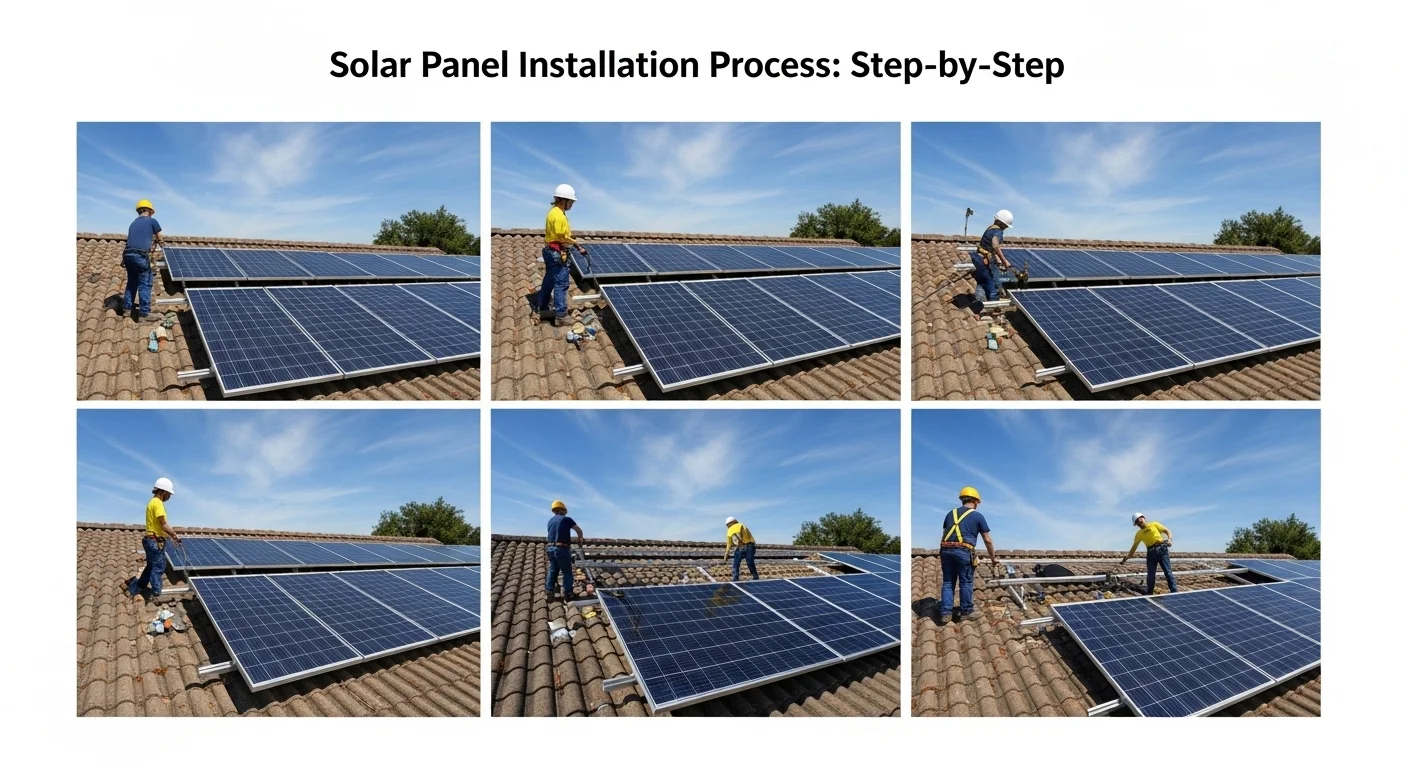
- Installation Labor (15–20% of cost). Licensed electricians, structural engineers, and crane rentals (for high roofs). This is where reputable companies separate from fly-by-night ones.
- Permits, Inspection, and Net Metering Setup (5–8% of cost). Government applications, utility coordination, and post-install inspection. Most reputable installers handle this for you.
Hidden Fees Most Quotes Don’t Show
Even good companies hide some costs. Watch for:
- Battery storage — adds ₹50,000–₹1,50,000 in India or $8,000–$15,000 in the US
- Roof reinforcement — for older homes that need structural upgrades
- Tree trimming or shade removal — to maximize solar output
- Long cable runs if your inverter is far from the panels
- EMI/financing fees if you take a loan
- Net metering connection fees charged by some utilities
Always ask for an itemized quote showing each component. If a company refuses, walk away.
Solar Panel Installation Cost in India (2026 Numbers)
| System Size | Average Cost (Pre-Subsidy) | After Subsidy | Avg. Monthly Bill Savings |
|---|---|---|---|
| 1 kW | ₹65,000 – ₹85,000 | ₹35,000 – ₹50,000 | ₹600 – ₹800 |
| 2 kW | ₹1,25,000 – ₹1,60,000 | ₹65,000 – ₹95,000 | ₹1,200 – ₹1,600 |
| 3 kW | ₹1,80,000 – ₹2,40,000 | ₹1,05,000 – ₹1,50,000 | ₹1,800 – ₹2,400 |
| 5 kW | ₹2,90,000 – ₹3,80,000 | ₹2,15,000 – ₹3,00,000 | ₹3,000 – ₹4,000 |
| 10 kW | ₹5,50,000 – ₹7,00,000 | Limited subsidy above 3 kW | ₹6,000 – ₹8,000 |
PM Surya Ghar Subsidy (India, 2026):
- 1 kW: ₹30,000
- 2 kW: ₹60,000
- 3 kW and above: ₹78,000 (capped)
State subsidies vary — Gujarat, Maharashtra, and Kerala add additional state-level incentives.
Solar Panel Installation Cost in the US (2026 Numbers)
| System Size | Average Cost (Pre-Tax Credit) | After 30% Tax Credit | Avg. Monthly Savings |
|---|---|---|---|
| 4 kW | $10,000 – $14,000 | $7,000 – $9,800 | $80 – $120 |
| 6 kW | $15,000 – $22,000 | $10,500 – $15,400 | $120 – $180 |
| 8 kW | $20,000 – $28,000 | $14,000 – $19,600 | $160 – $240 |
| 10 kW | $25,000 – $35,000 | $17,500 – $24,500 | $200 – $300 |
Most US states also have additional rebates, SREC programs, or property tax exemptions.
Return on Investment: When Will Solar Pay for Itself?
In India, a 3 kW system saves about ₹25,000 per year on electricity. After subsidy, the system costs ~₹1,30,000. Payback period: 5 to 6 years. Panels last 25–30 years, so the next 20 years are essentially free electricity.
In the US, a 6 kW system saves about $1,500/year. After the tax credit, it costs ~$13,000. Payback period: 7 to 9 years. Panels last 25 years, so you’ll see at least 15 years of free electricity.
These numbers assume you stay in your home long enough to recoup costs. If you’re moving in 3 years, solar may not be financially worth it (although it does increase home resale value).
How to Get a Fair Quote
Three steps that have saved my readers thousands:
- Get 3 quotes minimum. Prices vary 20–40% between companies for identical systems.
- Compare equipment, not just totals. Cheap quotes often use Tier-2 or Tier-3 panels.
- Ask about post-install service. Cleaning, monitoring, and warranty support matter more than initial price.
Final Thoughts
The solar panel installation cost in 2026 is the lowest it has ever been — panel prices dropped 12% in 2025 alone, and government subsidies are at historic highs. The real question isn’t whether solar is worth it. It’s whether you’ve found an installer who’ll deliver a fair, transparent, professionally installed system.
Get multiple quotes, ask about Tier-1 panels, demand an itemized breakdown, and verify the company has at least 5 years of installation history. Do that, and solar will deliver 25 years of energy savings while paying for itself in 5–9.